Most major insurance accepted. Coverage for this procedure varies; we check your benefits before treatment.
Plantar Fasciitis Embolization (PFE) in Kansas City
Minimally invasive procedure for chronic heel pain that hasn't responded to conservative treatment.
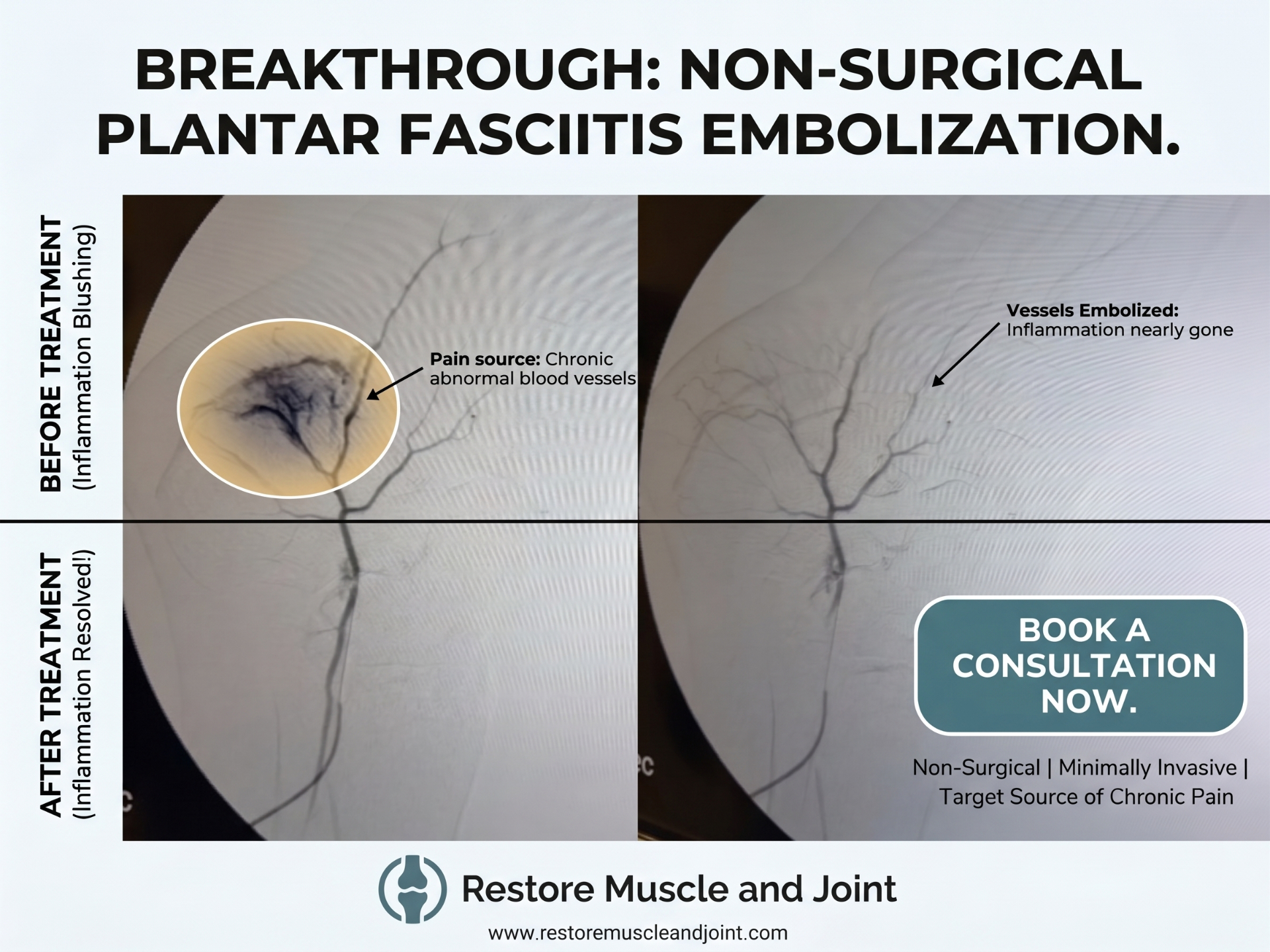
Plantar fasciitis is one of the most common causes of chronic heel pain. When conservative measures like rest, ice, stretching and orthotics aren't enough, a minimally invasive procedure called plantar fasciitis embolization — also known as plantar fascia embolization, heel pain embolization, or foot artery embolization — can provide lasting relief. In chronic cases, abnormal blood vessels form around the inflamed plantar fascia; embolization targets these vessels to reduce inflammation and pain without surgery.
What Is Plantar Fasciitis Embolization?
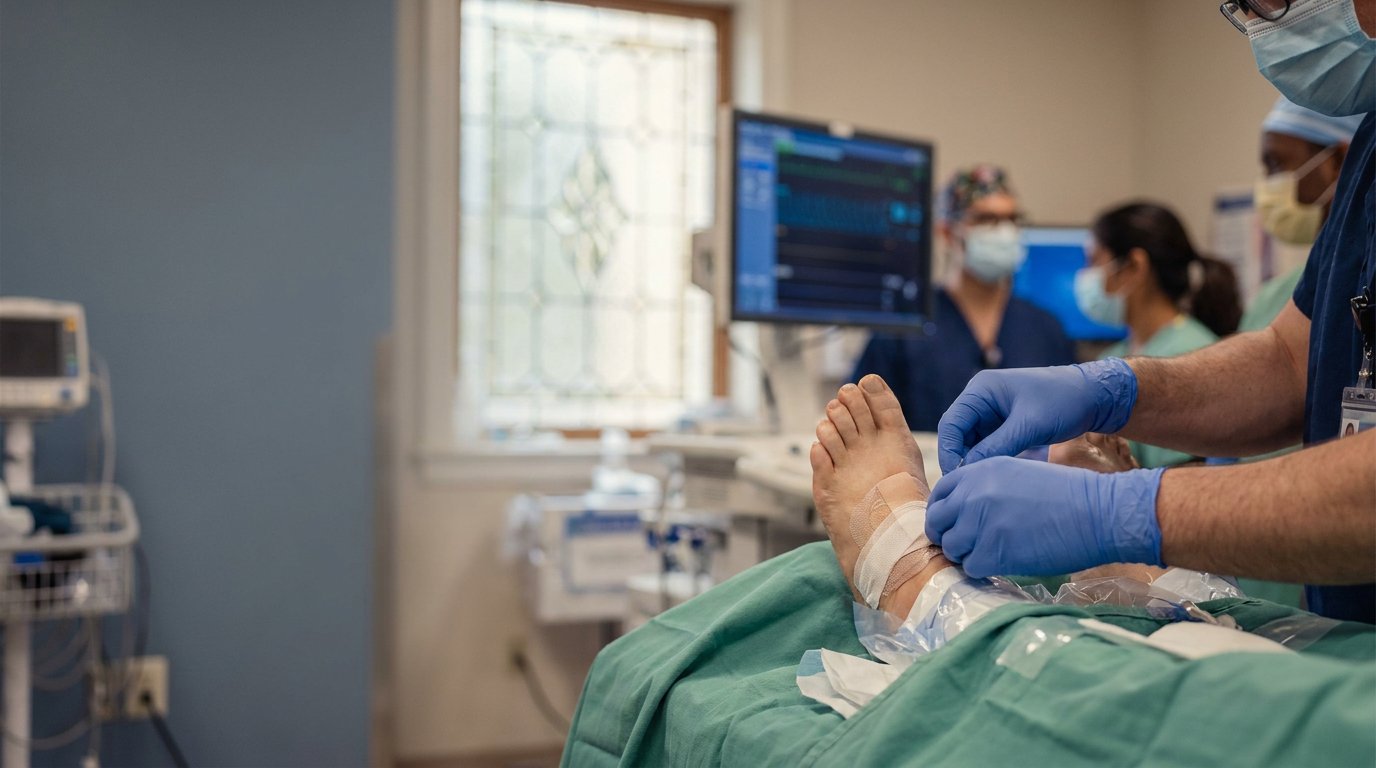
PFE is performed by a board‑certified interventional radiologist. Using imaging guidance, a thin catheter is inserted through a small puncture in the ankle or thigh and navigated to the tiny arteries feeding the inflamed plantar fascia. Tiny microparticles are injected to block these abnormal vessels, allowing the tissue to heal naturally. The procedure typically takes 30–60 minutes and is done on an outpatient basis, so you go home the same day.
Key Steps
- Catheter insertion: A small catheter is placed into a blood vessel in the ankle or thigh.
- Guided navigation: Imaging (ultrasound or X‑ray) guides the catheter to the abnormal blood vessels supplying the plantar fascia.
- Particle injection: Biodegradable particles are injected to block the blood flow, reducing inflammation and pain.
See the Procedure in Action
Watch how Plantar Fasciitis Embolization works and hear directly from our specialists about what to expect before, during, and after the procedure.
Most major insurance accepted. Coverage for this procedure varies; we check your benefits before treatment.
Benefits of PFE
- Minimally invasive: No surgical incision means less trauma, minimal scarring, and a lower risk of infection.
- Quick recovery: Most patients resume normal activities within days after the procedure.
- High success rates: Studies report significant reductions in heel pain; one study noted that 80% of patients experienced substantial relief after embolization.
- Outpatient procedure: The treatment is performed under local anesthesia with light sedation, and patients go home the same day.
- Avoids steroids and implants: PFE treats the source of pain without long‑term steroid use or implants, reducing the risk of plantar fascia rupture.
Who Should Consider PFE?
You may be a candidate if you have chronic plantar fasciitis that has not improved with conservative therapies such as rest, physical therapy, NSAIDs or orthotics. Patients who cannot wait 6‑12 months for symptoms to resolve naturally may also benefit. Our healthcare team will evaluate your medical history and imaging studies to determine whether PFE is appropriate.
Safety and Considerations
Plantar fasciitis embolization has an excellent safety profile when performed by experienced interventional radiologists. However, individual results vary. As with any procedure, there are potential risks such as bruising, mild numbness or non‑target embolization; these are rare when the procedure is performed correctly. We'll discuss your medical history, current medications and any allergies before scheduling your procedure.
Performed at Leading Medical Centers Nationwide
Plantar Fasciitis Embolization (PFE) is part of a growing field of minimally invasive, image-guided interventional procedures. Leading academic medical centers and interventional radiology programs across the country are actively performing and researching arterial embolization for musculoskeletal and chronic pain conditions, including:
- UCLA HealthInterventional Radiology
- Mount SinaiInterventional Radiology
- Cleveland ClinicInterventional Radiology
- Mayo ClinicInterventional Radiology
- Johns Hopkins MedicineInterventional Radiology
- UCSF HealthInterventional Radiology
- Penn MedicineInterventional Radiology
- NYU LangoneInterventional Radiology
- Stanford Health CareInterventional Radiology
Restore Muscle and Joint is independent and not affiliated with the institutions listed above. Links are provided as references to the broader field of interventional radiology where these procedures are performed and studied.
Frequently Asked Questions
What is Plantar Fasciitis Embolization?
Plantar Fasciitis Embolization (PFE) is a minimally invasive procedure that reduces chronic heel pain by blocking tiny abnormal blood vessels that cause inflammation around the plantar fascia. It's performed through a small pinhole in the wrist or groin, with no incision or stitches required.
How does Plantar Fasciitis Embolization work?
Using advanced imaging, a vascular specialist inserts a micro-catheter into the arteries supplying the inflamed fascia. Microscopic particles are injected to reduce abnormal blood flow, lowering inflammation and pain while promoting natural healing.
Who is a good candidate for this procedure?
You may qualify if you have suffered from heel pain for 6 months or longer, have failed conservative treatments like orthotics, injections, or physical therapy, have confirmed plantar fasciitis on imaging, and want a non-surgical alternative with minimal downtime. Restore Muscle and Joint offers a free consultation to determine if you qualify.
How effective is Plantar Fasciitis Embolization?
Studies show over 70-80% of patients experience significant pain relief within weeks, with continued improvement over time. Many patients return to normal walking and activity levels without surgery or long recovery periods.
Is Plantar Fasciitis Embolization covered by insurance?
In most cases, yes. Medicare and many major insurance plans may cover the procedure when medical necessity is established. Our team offers a complimentary insurance benefit check before scheduling.
What is the recovery like?
Most patients walk the same day and return to normal activities within a few days. There are no surgical incisions or sutures, and post-procedure pain is usually mild compared to traditional surgery.
How does this compare to plantar fasciotomy or heel surgery?
Unlike surgery, PFE requires no cutting or anesthesia, has minimal recovery time, carries lower risk of infection or complications, and can be performed in-office in as little as an hour.
What are the risks or side effects?
Complications are rare but may include temporary bruising or mild soreness at the catheter site. Because this is a minimally invasive, image-guided procedure, risks are significantly lower than open surgery.
Who performs Plantar Fasciitis Embolization at Restore Muscle and Joint?
PFE is performed at our Kansas City office by board-certified vascular surgeons Dr. Robert R. Carter (MD, FSVS, FACS, RPVI) and Dr. Jonathan E. Wilson (DO, FACOS, FSVS, RPVI), both with advanced fellowship training in image-guided endovascular procedures.
How long does pain relief from PFE last?
Published clinical data shows that most appropriately selected patients experience sustained heel pain reduction beyond 12 months. Because PFE addresses the underlying abnormal blood vessels driving inflammation, results are typically durable.
Is plantar fasciitis embolization the same as heel embolization?
Yes — 'heel pain embolization,' 'plantar fascia embolization,' and 'foot artery embolization' all refer to the same minimally invasive, image-guided procedure that reduces blood flow to inflamed areas of the plantar fascia.
Can I avoid plantar fasciitis surgery (fasciotomy) with PFE?
For many patients with chronic plantar fasciitis that hasn't responded to conservative care, PFE provides meaningful pain relief and can eliminate the need for plantar fasciotomy or other heel surgery — without incisions, stitches, or extended recovery.
How can I schedule a consultation in Kansas City?
You can schedule by calling (816) 452-4488 or visiting 4119 NW Barry Rd., Kansas City, MO 64154. We also offer same-day appointments and free imaging reviews to determine candidacy.
Meet Your PFE Providers
Your Plantar Fasciitis Embolization is performed by board-certified vascular surgeons with advanced fellowship training in image-guided, minimally invasive procedures.

Dr. Robert R. Carter
MD, FSVS, FACS, RPVI
Board-certified vascular surgeon and Fellow of the American College of Surgeons. UC Davis medical degree, vascular surgery fellowship at the University of Kentucky. Published author and associate professor training the next generation of surgeons in Kansas City.
View Full Bio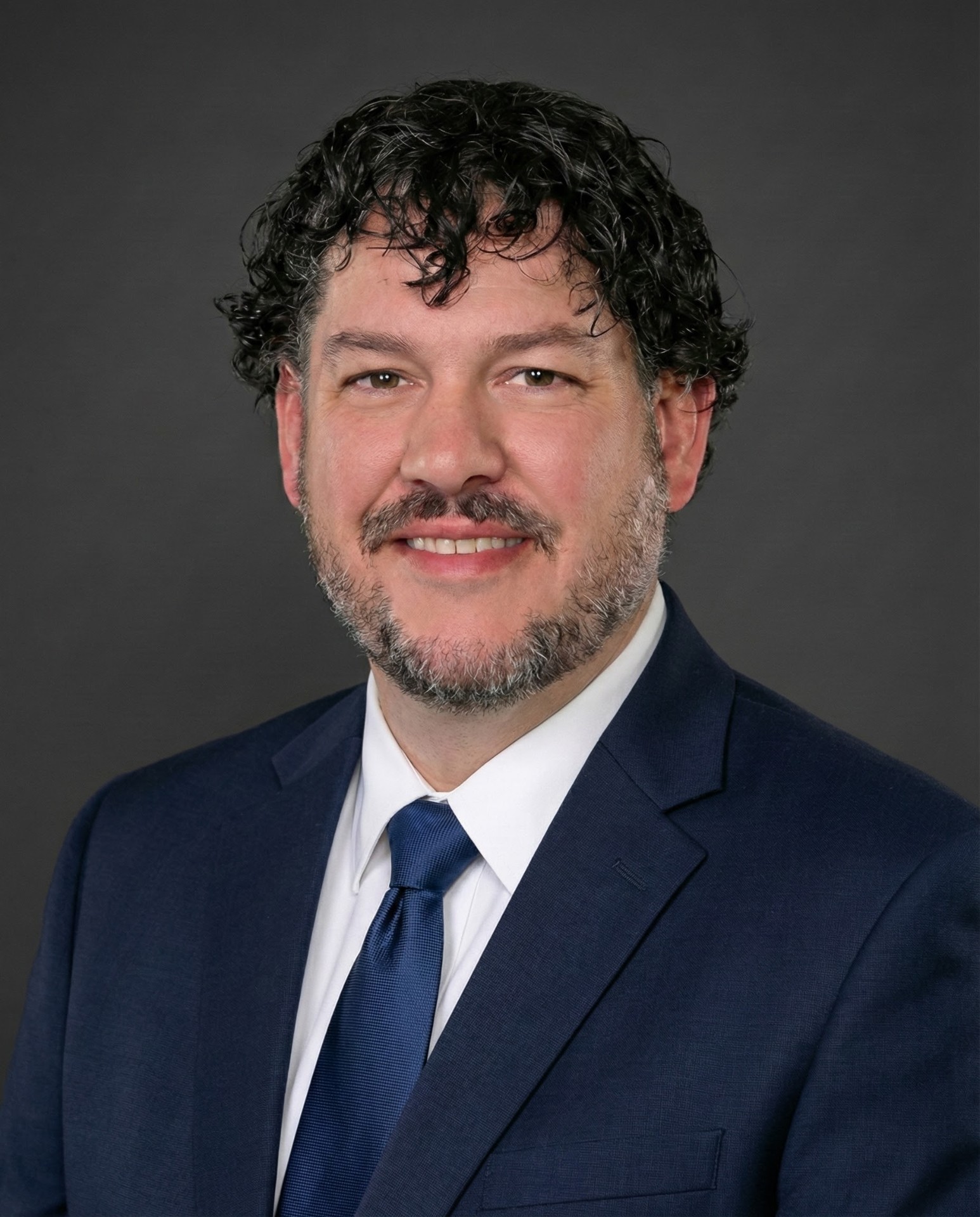
Dr. Jonathan E. Wilson
DO, FACOS, FSVS, RPVI
Board-certified vascular surgeon specializing in minimally invasive, image-guided embolization procedures for chronic pain conditions of the foot, knee, shoulder, and elbow.
View Full BioGet Your Free Consultation Today
If heel pain is limiting your daily life, you don't have to suffer. Our team at Restore Muscle and Joint and Restore Vascular & Vein Center specializes in innovative treatments like plantar fasciitis embolization. Contact us to schedule a consultation and find out whether this minimally invasive procedure is right for you. We'll review your case, answer your questions and help you take the next step toward long‑lasting relief.
Request Your Appointment Today
Request a visit and our care team will call you within one business day to arrange your appointment.
Ready to talk to a specialist?
Our care team can help you explore your options and arrange an appointment that fits your needs.
Most major insurance accepted · 4119 NW Barry Rd, Kansas City, near Zona Rosa